Flamenco Dance Classes in Exeter
Flamenco Exeter
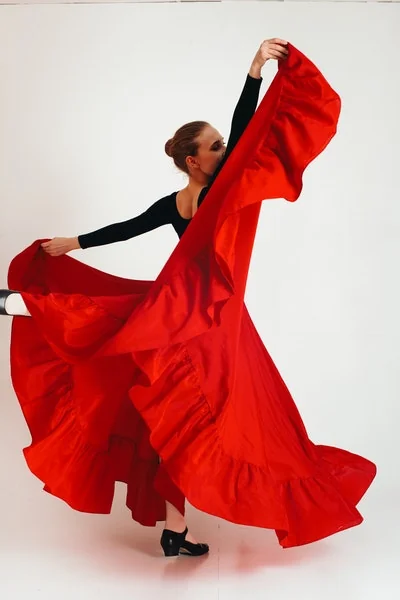 Flamenco — Exeter
Class is coming soon
Send the form over for class news
Class Details
Location: Exeter City Centre
Day: TBC
Time: TBC
Age Group: 17 – 75
Teacher: —
Class Structure
Beginners Class — 60 Minutes
Posture & Warm-Up
Lifting the chest, loosening the wrists and anchoring the feet, easing into the tall, proud bearing from which every flamenco movement takes its shape.
Footwork (Taconeo)
Heel drops, toe taps and ball strikes worked through slowly before lifting the tempo, turning the feet into a percussion line that talks back to the guitar.
Arms & Hands (Braceo)
Broad, looping arm paths and the coiling wrists of floreo, set over a slowly rotating upper body, build that instantly recognisable flamenco line.
Palmas & Choreography
Clapping out the compás as a room, then knitting footwork, braceo and a turn into a compact routine danced to the palo chosen for the week.
Full Run & Cool Down
Taking the routine from top to bottom with real fire and duende, then releasing the calves, wrists and shoulders through an unhurried stretch.
About Flamenco Dance Classes in Exeter
Flamenco is the blazing spirit of southern Spain poured into movement — a proud carriage, ferocious stamping feet and arms that sweep the air overhead. Our weekly flamenco classes in Exeter unpack the craft one layer at a time: the percussive taconeo of the feet, the flowing braceo and floreo of arms and hands, the palmas claps that lock in the rhythm, and the compás that holds it all together. You will meet the classic palos along the way too, from the weight of soleá to the brightness of alegrías, building toward a short choreography that ends up entirely your own.
Exeter carries a real fondness for Spanish culture — through its arts festivals, the lively student scene at the University of Exeter, and the touring flamenco shows that make their way down to Devon — yet a steady weekly class for adult beginners and improvers has long been missing. Ours run from a studio in Exeter city centre with a hard floor cut out for taconeo, within easy reach of dancers from Topsham, Exmouth, Crediton and Newton Abbot. With further venues on the drawing board, a session nearer home could be only a short way off.
No experience is asked of you — only a readiness to stamp, clap and let the music take over. Slip on a shoe with a solid heel to start (a character shoe or any hard-soled pair is spot on) and something you can move freely in. Take a look through the whole spread of 20 dance classes in Exeter, or round up your friends for a fiery flamenco hen party.
Got a Question About Flamenco?
Pop your details in below and we'll let you know as soon as days, times and the timetable are confirmed.
What You Get From Flamenco
Feet That Speak
Taconeo turns your footwork into a rhythm you can hear, honing timing, coordination and a feel for the beat that follows you into whatever style you take up next.
Let the Fire Out
Flamenco gives big feelings somewhere to go — defiance, longing, pure delight. Dancing with duende lets the heart speak, and that proves as freeing as any performance.
Stand Tall
That dignified, upright bearing at the heart of flamenco slowly works its way into your everyday stance, leaving you to stand and move with extra poise long after the class ends.
Strong From the Ground Up
Pounding footwork builds real strength in the calves and ankles, while the lifted, sweeping arms challenge the shoulders and back — a top-to-toe workout wrapped up in Spanish passion.
Your Flamenco Dance Journey
From that opening heel stamp to performing a full routine ablaze with feeling — here is roughly how the path runs.
Finding Your Stance
Getting Started
Meeting the dignified, upright posture, your debut golpe stamp, heel and toe contacts, and the earliest shapes for the arms and hands. The trick early on is to feel anchored low to the ground and lifted tall at the same time.
What to Wear
Starting out, footwear matters most: anything with a firm, solid heel will serve, be it a character shoe, a Cuban heel or another hard-soled option. A long skirt is the classic look yet entirely optional, and a snug top keeps the shape of your arms clear to see.
Catching the Compás
Developing Technique
Footwork phrases that stretch out further, braceo dressed with its floreo turns of the wrist, and a first attempt at spinning. The compás begins to land — the repeating count of beats that gives each palo its structure.
Palmas & Rhythm
Clapping on the beat, marking the accents underfoot and feeling how a twelve-count palo sits apart from a four-count one as the rhythm beds in.
Dancing With Duende
Choreographic Pieces
Sewing footwork, arms and turns into a complete routine — the call, the rise and the close — and learning to shade it with the emotional charge flamenco lives for.
Cultural Context
Coming to know the palos by their character — the gravity of soleá, the sparkle of alegrías, the roll of tangos — and what each one calls for from you as a dancer.
The Confident Bailaora
Performance & Artistry
Dancing to guitar and cante with the confidence to read the music as it unfolds, bringing your own feeling to a piece instead of merely counting out the steps.
What Comes Next
Pick up castanet and abanico fan technique, hunt out a live tablao to enjoy, or wander into tango or salsa for a fresh perspective on timing and dancing with a partner.
Flamenco Dance FAQ
The questions newcomers tend to raise with us before a first flamenco class.
Can a total beginner pick up flamenco from scratch? +
Without question. The beginners session begins with the tall, dignified posture, a lone heel strike and a first unfurling of the hands, and everything grows from that point. Practically all the dancers walking through our Exeter door are new to flamenco, so you will be finding your feet next to others sitting at precisely the same stage.
Which shoes suit a flamenco class best? +
Go for footwear with a firm, solid heel so each strike sounds out clearly; a character shoe, a Cuban-heeled shoe or any hard-soled pair will all do the job. Proper flamenco shoes with nails set into the heel and toe are lovely but far from essential as you start. The soft trainers and ballet pumps are best kept in your bag.
What goes on during a flamenco lesson? +
Each hour travels through posture and warm-up, the percussive footwork called taconeo, the flowing arm and hand shaping of braceo and floreo, palmas claps that hold the pulse, and a short routine danced to one traditional palo. You finish having both drilled the technique and performed something whole.
Is a block of flamenco classes better value? +
One drop-in visit costs £10, carrying no joining fee and no paperwork to sign. If you would sooner commit, a four-week block is £32, landing each class at £8. Nothing locks you in — no contract and no membership — so you simply show up when the timetable suits your week.
Where in Exeter do the flamenco classes take place? +
We run them from our studio in Exeter city centre, a short stroll from the Cathedral, Gandy Street and the High Street, on a hard floor that loves the footwork. Extra venues across the area are in the works, so do ask us about a session that lands closer to your front door.
Must I have Spanish roots or speak the language to take up flamenco? +
Not even slightly. Flamenco is danced and cherished right across the globe, and the Spanish terms settle in by themselves as you go along. All you need to bring is curiosity and respect for the tradition — the passion and the duende rise out of the music and the movement on their own.
Will flamenco actually keep me fit? +
Very much so, in the most enjoyable way. The relentless stamping lights up the calves, ankles and core, while holding the arms aloft through floreo asks real endurance of the shoulders and back. You leave warm, properly worked and genuinely taken aback by the sweat one hour of compás can raise.
Do you bring castanets, fans or shawls into class? +
Not in the first few weeks — feet, arms, hands and rhythm take priority so the groundwork is rock solid. Once your taconeo and braceo settle, extras like castanets, the abanico fan and the mantón shawl get folded into the routines bit by bit.
What sort of music will I be dancing to? +
Stirring flamenco guitar, cante singing and percussion fill the studio. As the weeks pass you start to tell the palos apart — the depth of soleá, the bounce of alegrías, the crackle of bulerías and the roll of tangos — each with a compás, a mood and a pace all its own.
Can I arrange private flamenco lessons in Exeter? +
Absolutely — we can lay on one-to-one and small-group tuition whenever you ask. It works a treat for prepping a performance, putting together choreography for a big occasion or ironing out a stubborn escobilla. Get in touch and we will shape the sessions around exactly what you want to achieve.
Ready to Spark the Fire of Flamenco in Exeter?
Register your interest and we'll send the latest flamenco timetable the moment the dates are set.
Get More Info →